Manufacturing Process Of Wheel Hub Bearings
There are more than 70 complete production steps for a wheel hub bearing. The main processes and processes are introduced here to help us have a general understanding of the bearing production process. If you want to get more information, welcome to visit our factory.
The main production steps can be divided into the following six steps:
1. Forging→Normalizing
Forgings:
The raw materials are GCR15 and 65MN. The materials are cut to length according to the parts that need to be processed, then heated, and then forged according to the part mold.
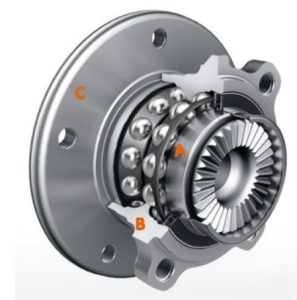
Material:
A Inner ring: GCR15
B Outer ring: 65MN
C Flange: 65MN
Normalizing:
Through the heat treatment normalizing process, the forgings are normalized for 4-5 hours to eliminate material stress and stabilize the internal structure of the material.
1)Heat to more than 600 degrees
2)cooling
3)180-200 degrees Constant 3-4 hours Stabilize the internal structure
2. Rough turning → Polishing
rough machining
After forging and normalizing, there is often a large amount of blank left on the surface of the workpiece. If processed directly to the drawing size, waste products will be caused due to thermal stress, thermal deformation of the workpiece, etc.
Therefore, rough machining must be carried out first, and about 2 mm of oxide scale on the surface of the forging is removed through the rough turning process.
Allowance before rough turning: 1.5mm on each side
Margin after rough turning: 0.6mm/0.4mm on each side
polishing
After rough turning, polishing is performed. Shot blasting is the surface treatment of the parts, which can remove burrs on the surface of the parts and make the surface of the parts not processed in subsequent processes more beautiful.
3. Finish turning 1→Heat treatment→Finish turning 2→Finish turning 3
This step is mainly to process according to the drawings to make the workpiece meet the standard requirements.
Purpose:
Finish turning: Meet the drawing requirements
Heat treatment: Increase the hardness of the bearing
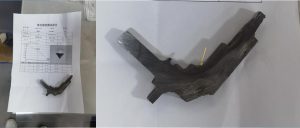
Steps:
Finish turning step 1: machining part channel
Heat treatment: Partially quenching the channel part to increase material hardness
Finish turning step 2: Finishing the second sequence: finishing the channel and inner contour
Finish turning step 3: Finishing the outer contour diameter, the error is controlled at ±1.5 wires (±15um)
Detailed process:
Heat treatment Inner ring
When the temperature cooling down to 360 degrees, put the bearing into the oil pool for a while to maintain hardness
Heat to 860°C 40- 50 min
Cool down to 300°C About 2 hours
Cool down to 1 80°C About 2-3 hours
medium frequency hardening
Heat to 860°C, 20~30 sec
Flush with water
Put it in the tempering furnace within 4 hours
Cool down to 180°C,2-3 hours
4. Drilling/Pulling splines
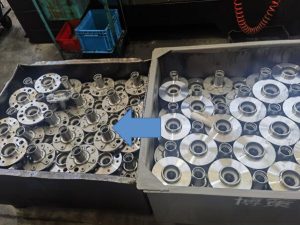
Drill the corresponding hole positions according to the part design drawings, and process the matching splines.
5. Grinding – Superfine – Washing
Grinding: grinding groove/raceway
1) Grind the outer circle first, which is the basis for grinding the groove. The accuracy is ±5um.
2) Grind the groove based on the outer circle.
Superfine: further polished with a grinder and oilstone, and the roughness is controlled at around 0.1
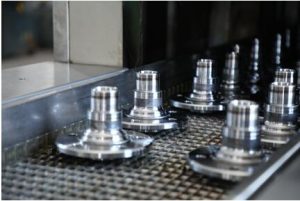
Washing: Washing is to remove magazines and oil on the surface of parts. The cleaning methods are mainly divided into ultrasonic oil washing, water washing, and drying.
Detailed process:
Grinding-Inner ring
Surface grinding – Noncore grinding – Coarse grinding channel -Fine grinding – Grinding the hole – Fine grinding raceway groove
Grinding-outer ring
First grinding outer diameter – Grinding groove – Fine grinding
Grinding-Flange
First grinding outer diameter – Grinding groove – Fine grinding
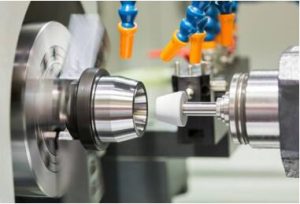
6.Test→Assembling→Packaging